Date: Amman – March 2026
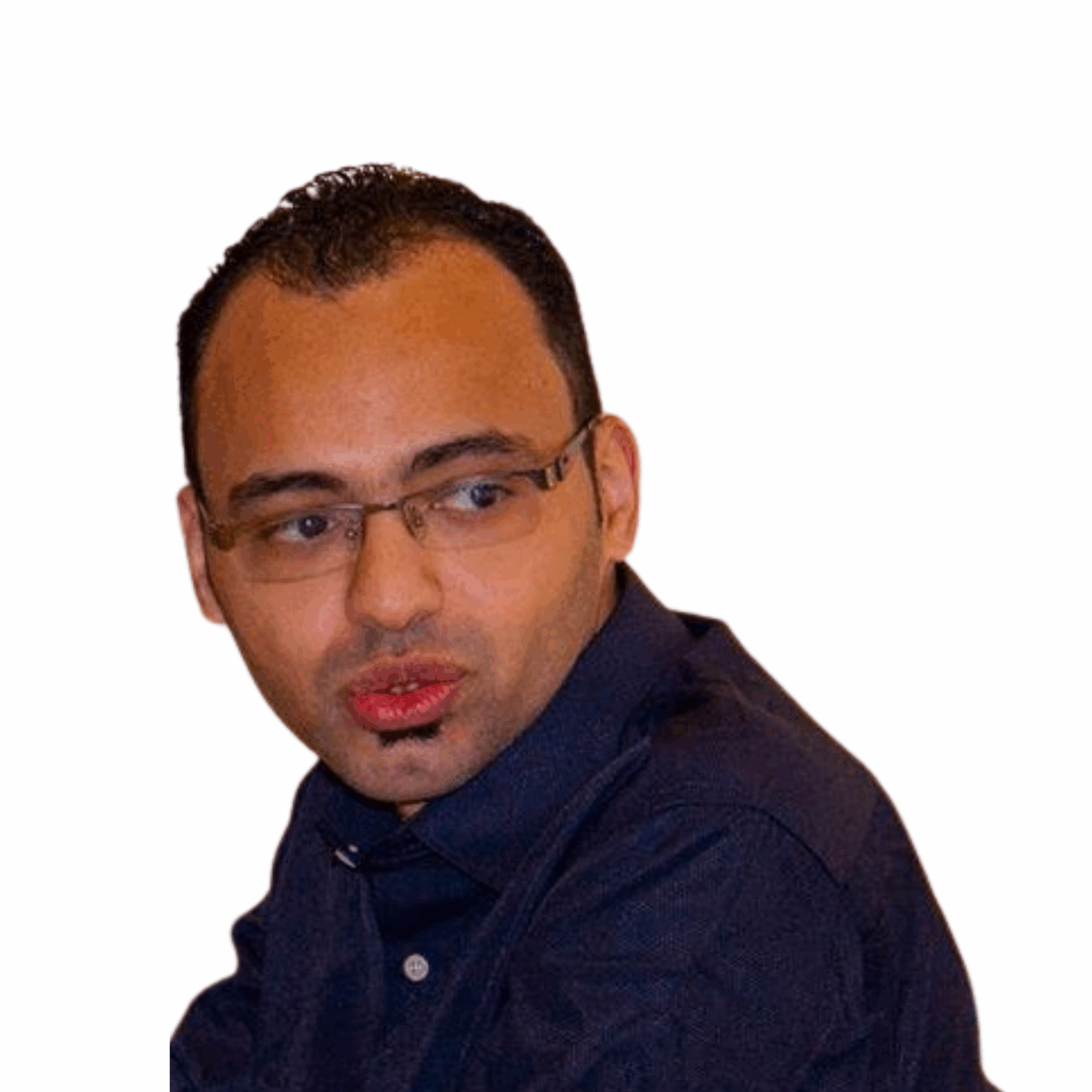
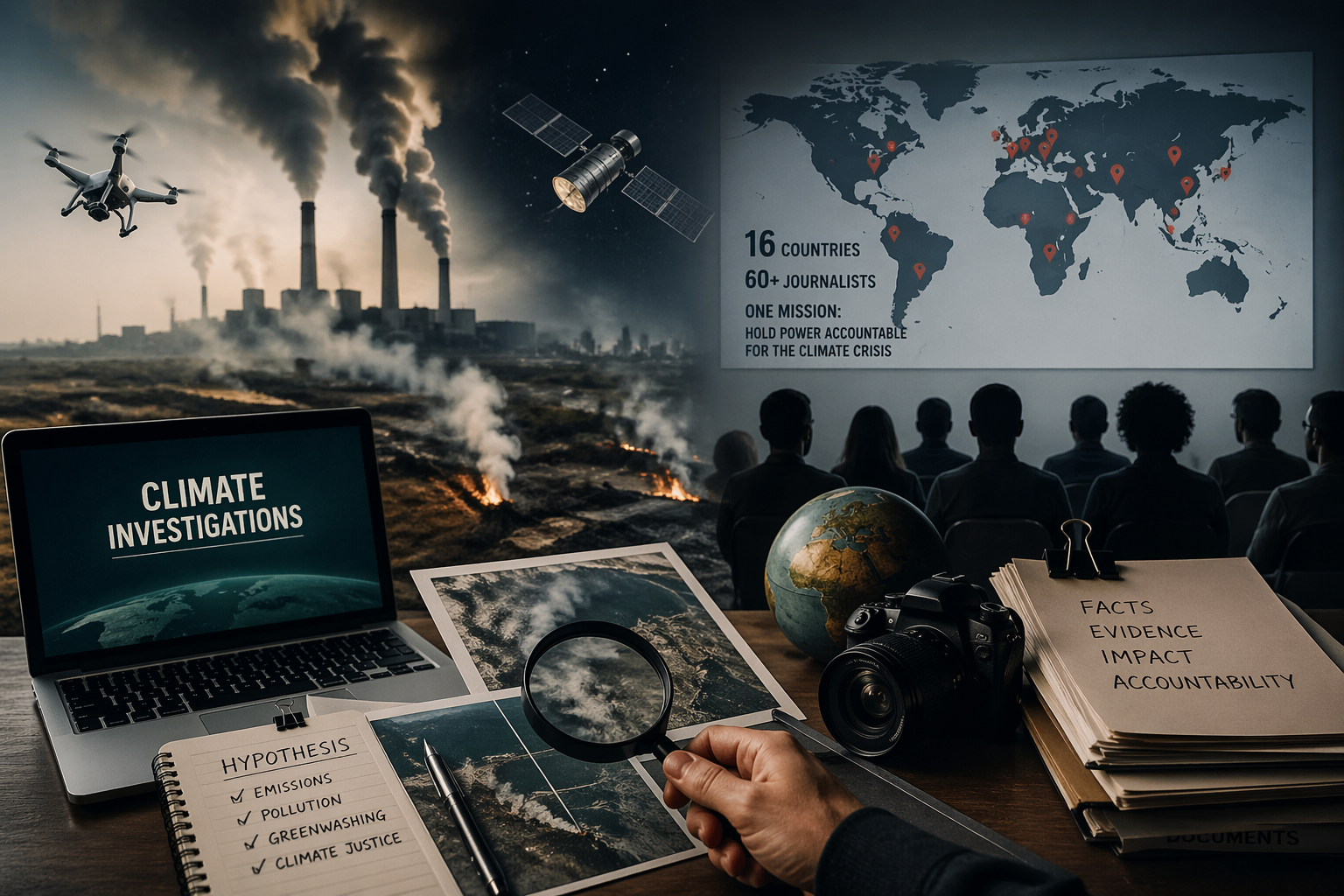
ARIJ organized a workshop titled “Climate Investigations Workshop,” delivered by environmental and climate investigations specialist and ARIJ Investigations Editor Ahmad Ashour, over three consecutive days from March 10–12, 2026, with two hours of training per day (Amman time), supported by UNESCO. Registration was open to participants from across the Arab world and beyond, within an open and interactive training format. More than 60 journalists attended the training.
From Definitions to Hypothesis
The workshop opened with a solid conceptual foundation. The first day focused on distinguishing between climate journalism and environmental journalism, clarifying that climate journalism is a subset of environmental journalism, not the reverse, and that its core focus is greenhouse gas emissions and the causes of global warming exclusively. Ashour drew a key distinction between a climate report and an investigative piece, emphasizing that a true investigation requires an identifiable human actor, a clear victim, and a documented legal violation. The session also covered the three main types in this field: climate violations investigations, climate solutions journalism, and climate justice journalism, which centers the human story and exposes the disproportionate impact of the climate crisis on the most vulnerable communities.
On the second day, the workshop moved to building and developing a hypothesis based on accumulated facts, with a detailed overview of open-source tools and scientific databases, and how satellite imagery can be used to monitor vegetation loss and measure air quality. Considerable time was also devoted to climate disinformation and greenwashing, as Ashour explained how large corporations promote false climate solutions and how these narratives spread through media and social platforms, with a practical demonstration of tools for tracking such campaigns and uncovering their funders.
The third day was dedicated to human sources and their types in climate investigations — distinguishing between the affected party, the expert, the official, and the whistleblower — alongside specialized tools for monitoring emissions and tracking gas flaring. The workshop concluded with an open discussion on the most common mistakes in submitting investigation proposals to ARIJ, and how journalists working on these issues can make use of the research support the network provides.
Interactive Dialogue Throughout All Three Days
The workshop went beyond the presentation and theoretical framework, becoming a genuine space for discussion. Participants shared actual investigation ideas they were working on from Egypt, Morocco, Yemen, Palestine, Tunisia, and elsewhere, and worked with the trainer to dissect and assess them against the methodology presented. Among the most notable closing remarks, Ashour emphasized that climate issues are not distant scientific matters; they are tied to power, money, and the interests behind environmental corruption, and that a journalist’s role begins with identifying these connections rather than stopping at the problem itself.
Wide Participation from 16 Countries
The workshop brought together more than 60 journalists from 16 countries. Post-workshop evaluation results conducted by ARIJ showed a high overall satisfaction rate of approximately 90% for both the training and the trainer.
Participant Testimonials
Tamara Mohsen from Iraq said: “The workshop is extremely valuable for any investigative journalist interested in climate, it professionally clarifies the difference between environmental and climate issues and focuses on tools we were previously unaware of.”
Alaa Kanaan from Palestine noted that “the training program equipped him to conduct an investigation related to climate or environmental issues, and strengthened his media and technical knowledge around environmental information.”
Salah Abu Lahim from Yemen expressed that the workshop “marked a turning point in his professional career and allowed him to understand how to connect scientific research with investigative journalism.”
This workshop is part of ARIJ’s commitment to equipping Arab journalists with editorial, methodological, and technical tools that enable them to produce evidence-based investigations — contributing to accountability and exposing responsibilities in the face of the climate crisis and the disinformation campaigns that accompany it.